
Kaffrine: a participatory diagnosis to map the actors of local food systems
How can a territory feed itself sustainably from its own resources? On 23 and 24 June 2026, at the Kaffrine Chamber of Commerce, CREATES gathered producers, processors, traders, consumers and government services for a participatory diagnosis and actor-mapping workshop on local food systems. Two days of dialogue and fieldwork to understand together how the territory feeds itself - and how to strengthen its food sovereignty.
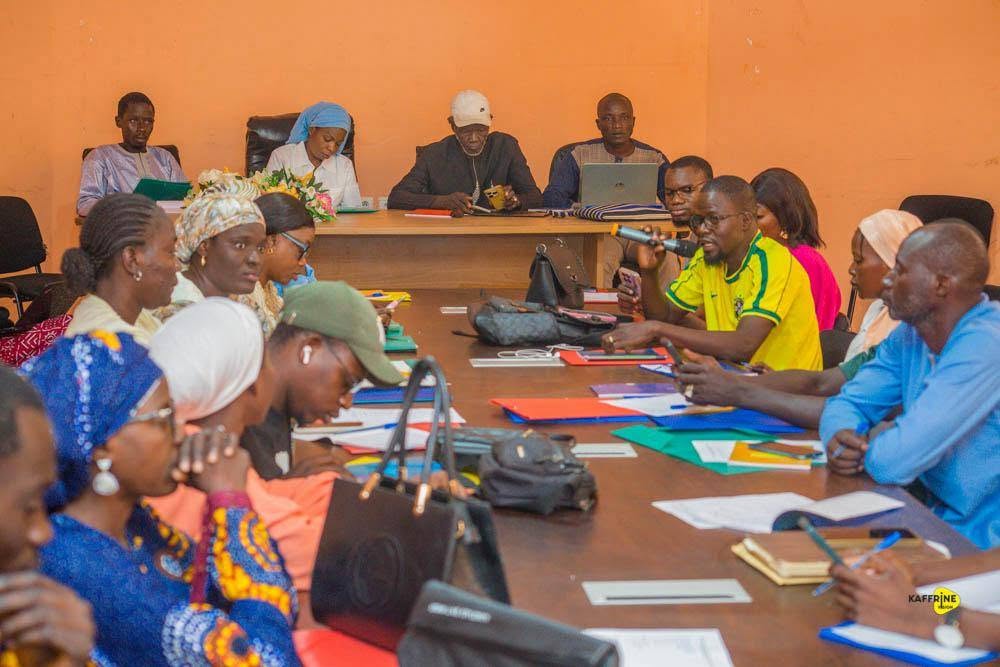
A dialogue led by the actors of the territory
The opening ceremony was chaired by Marie Ndao, representing the Secretary General of the Kaffrine Chamber of Commerce, who underlined the value of participatory diagnosis as a tool for understanding local realities. Mouhamadou Ndao, Deputy Head of the Regional Food Security Bureau (BRSA/SECNSA), presented the role of the Executive Secretariat of the National Food Security Council in promoting food and nutrition security in Senegal.
Contributions from Dame Sèck, President of the SOS Consumer Association of Kaffrine, and Lahine Ndao, CREATES focal point and agroecology coach, highlighted the stakes of local consumption and value-chain structuring. Several participants called for stronger support for women active in processing local products, while the Head of the Departmental Family Service recalled the nutritional wealth of often-overlooked local foods such as the “Dimb” fruit.
Three keys to valuing agro-ecological products
The first day was devoted to presentations and group work. Saliou Thiandoum, CREATES Agroecology Project Officer, introduced the Participatory Guarantee System (PGS), a local, collective certification that offers an alternative to conventional systems, which are costly and hard for small producers to access. The PGS rests on a few simple principles:
- Trust between producers, processors and consumers;
- Transparency about production and processing practices;
- Mutual control, through participatory visits and assessments;
- Reduced certification costs, to the benefit of family farms.
Berta Gielge, the project’s Value Chain Coordinator, then mapped out the links of a local food system - from production to consumption, through processing, marketing, transport and organic waste management - stressing the importance of strengthening the connections between them. Finally, Lahine Ndao detailed the support CREATES offers: individualised technical support, training, organisational capacity-building, help setting up the PGS, and strategic support for the OBSAT (Observatory of Territorialised Food Systems).
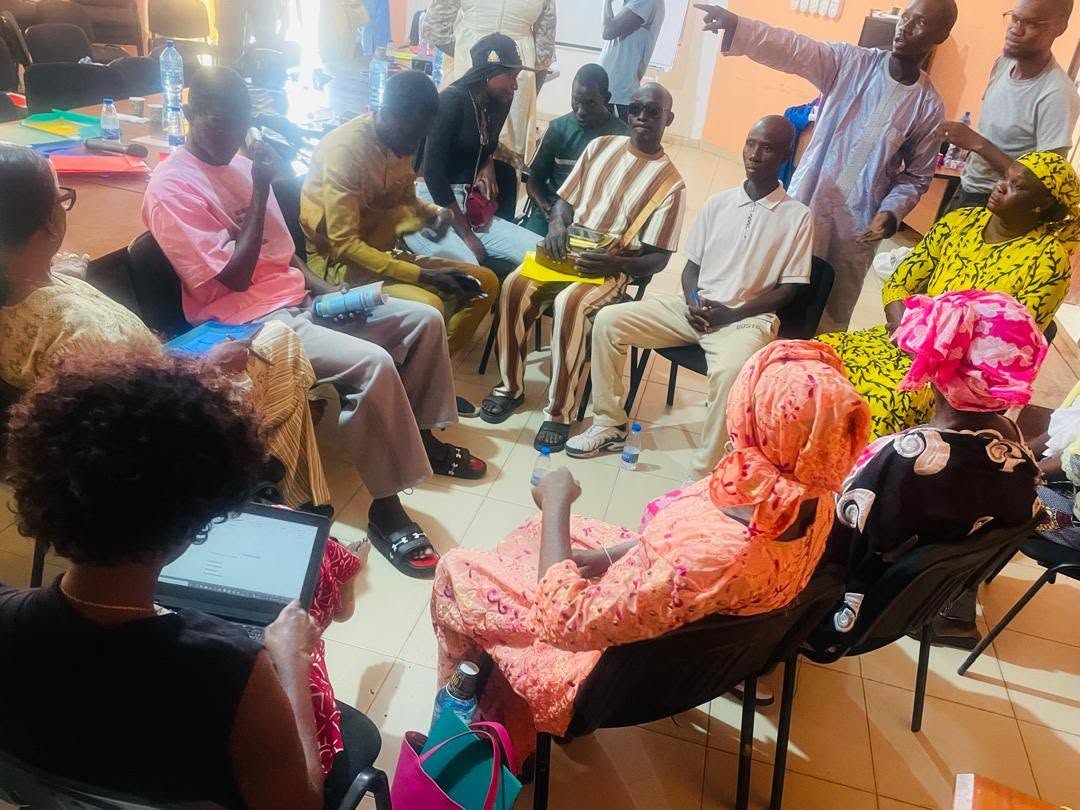
Diagnosis by those who live it
Split into three groups - producers, processors, and traders and consumers - participants identified the actors in each sector, their roles, their constraints and their opportunities for collaboration. The discussions surfaced shared challenges: insufficient storage and processing infrastructure, low valuation of local products, and significant needs in technical capacity-building.
A highlight of the day: each group presented its findings through forum theatre, dramatising the issues and the solutions they envisioned. This diagnosis sketched out a first map of the actors of Kaffrine’s food systems, revealing the diversity of stakeholders, the potential of agroecology, and the need to strengthen marketing channels.
In the field, initiatives that inspire
The second day took the delegation to the villages of Djidah 2, Pété and Ngodiba. At the Natangue Farm agro-ecological holding in Djidah 2, led by Lahine Ndao, participants observed soil-friendly cultivation and a work organisation that regularly employs women from the village - a concrete contribution to rural employment. The owner shared his plans: quail farming, dairy cows, fish farming and beekeeping.
In Pété, Modou Dieng’s farm showcased well-structured composting and intercropping as a risk-management strategy. Finally, in Ngodiba, a meeting with women producers allowed them to voice their difficulties: limited access to remunerative markets, distress selling of harvests, obtaining barcodes and FRA certification, and insufficient production space.
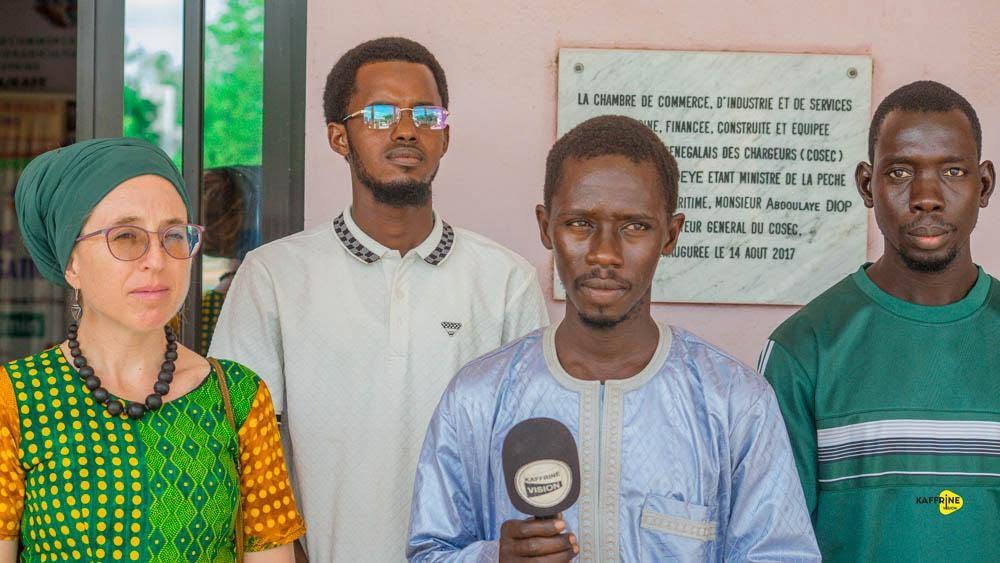
Laying the foundations of a territorialised food system
Closing the workshop, Dr Sadio, Head of the Sociology Department at USSEIN, recalled the OBSAT’s role in promoting territorialised food systems and called for greater commitment to local consumption.
Beyond the diagnosis, the workshop created a lasting space for dialogue between actors who often work in isolation. Participants expressed their determination to sustain this momentum and build a more inclusive, sustainable and resilient local food system for the people of Kaffrine.
This workshop is part of the NICE project, which aims to transform urban food systems in the secondary cities of Bambilor and Kaffrine by connecting producers, markets and consumers around better nutrition.