
Territorial advocacy: the DyTAEL Mbour Petite Côte technical committee sets its roadmap
The Mbour department is currently facing multiple pressures that deeply weaken its territories and communities: land grabbing, biodiversity destruction, overfishing, water pollution, overexploitation of groundwater, and the gradual breakdown of local value chains. In response to these extractive dynamics, the DyTAEL Mbour Petite Côte (Dynamics for a Local Agroecological Transition) gathered its technical committee on May 16, 2026, to define its roadmap and advocacy priorities for the months ahead.
What role for civil society?
Three questions structured the discussions: what role for civil society engaged in the agroecological transition in Senegal? How to build relationships with local and national authorities? And how to navigate between institutional diplomacy and the necessity of resistance in the face of extractive dynamics threatening the territories?
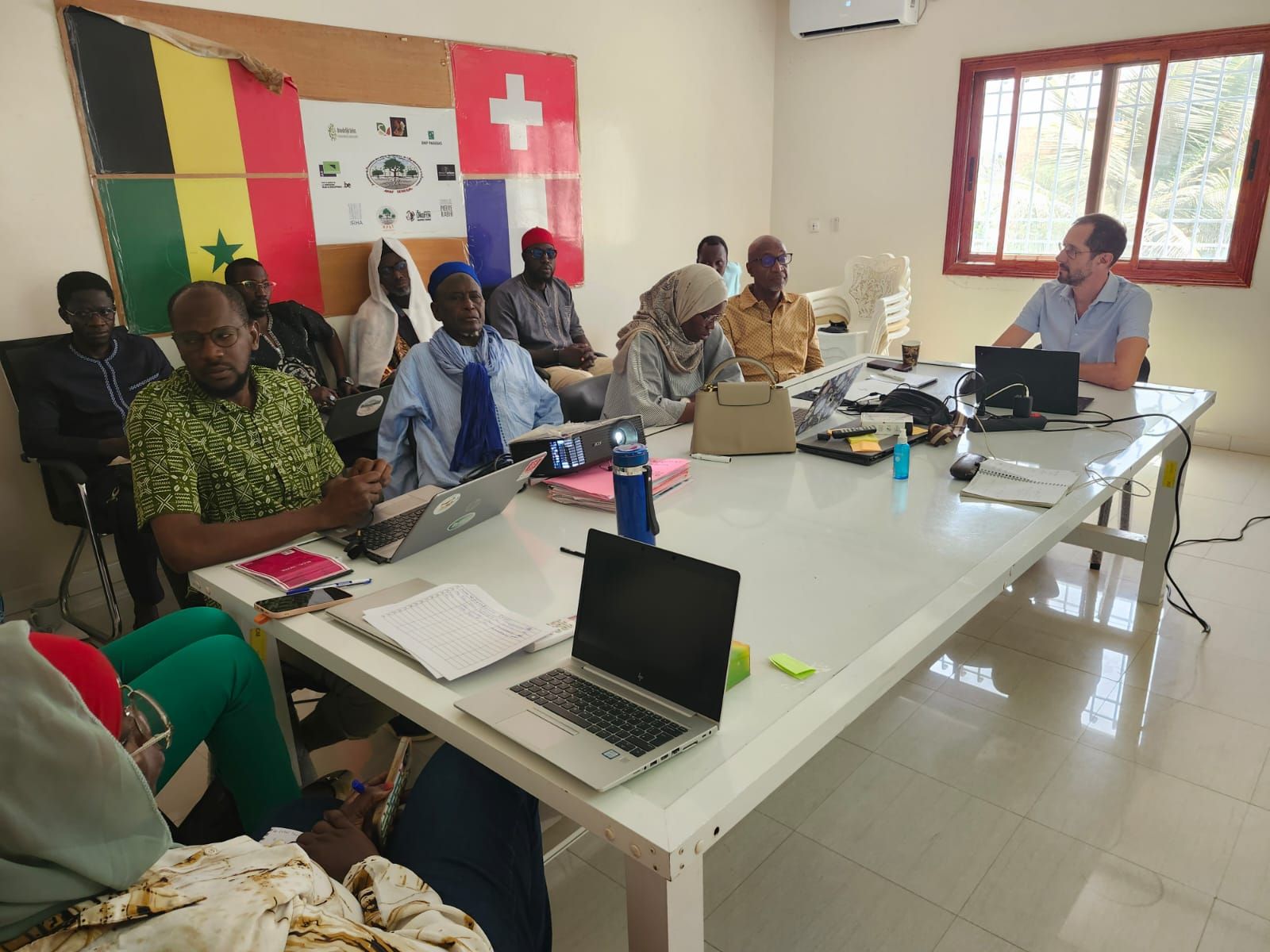
Several strategic priorities for the coming months
The meeting identified several strategic priorities to strengthen territorial governance, defend common resources, and support the local actors engaged in agroecological transitions.
CREATES’ contribution: science, advocacy, and communication
Through its role as an interface between science and action, CREATES contributes to this dynamic by producing scientific evidence in support of territorial advocacy. The centre also develops creative and participatory communication tools to bring these issues to the attention of authorities, farmers’ organizations, processing actors, and the general public.
The agroecological transition cannot be built without a collective capacity to defend the territories, local knowledge, and the living conditions of the communities that sustain them on a daily basis.