Bey Diiwaan
Cultivating Territories
Bey Diiwaan is a CREATES-Nitidæ consortium project, funded by the Liechtenstein Development Service (LED), deploying three living labs (Petite Côte, Saloum, Casamance) to territorialise agroecology in Senegal. The project combines inclusive food system governance, agroecological intensification, and alternative market development to strengthen sustainability and food sovereignty.
Facing the fragility of Senegalese food systems - environmental degradation, rapid urbanisation, land grabbing, dependency on imports -, Bey Diiwaan moves beyond the "plot to plot" logic of isolated experiments. The project aims to generate the critical mass of synergies and collective action needed for systemic change, working simultaneously at plot, village, departmental, and value-chain scales. For this initial pilot phase, the focus is on experimentation to pave the way for future, larger-scale interventions, rooted in existing territorial dynamics (DyTAELs, RACINES) and aligned with SDGs 2, 12, and 15.
Geographic area
Petite Côte, Saloum, Casamance (Senegal)
Funding
LED - Liechtenstein Development Service
Partners
Nitidæ, DyTAEL Mbour Petite Côte, DyTAEL Bignona, DyTAEL Fatick, RACINES, IPAR, ENDA-PRONAT, University of Bern
Objectives
-
Outcome 1 - Inclusive governance: strengthen the structures that facilitate the integration of agroecology and the just, sustainable use of natural resources into local policies and practices
-
Outcome 2 - Agroecological intensification: co-develop with communities the infrastructure and agronomic practices that make production systems more sustainable and productive
-
Outcome 3 - Alternative markets: open new opportunities for producers and processors by strengthening collaboration between food system actors
Intervention territories
Petite Côte (Mbour department)
A rapidly urbanising area under strong land pressure and accelerated environmental degradation, but with a dynamic economy and growing demand for healthy products. Focus: collective farming initiatives, territorial markets, support to the Mbour Petite Côte DyTAEL and the RACINES network. CREATES hosts the Thiafoura living lab here.
Saloum (Niakhar, Fatick department)
An agropastoral area weakened by soil salinisation, climate variability, and competition with global markets on rain-fed crops (millet, groundnut). Nitidæ has supported producer organisations here since 2021 and works with the Fatick DyTAEL - the first DyTAEL established in Senegal.
Casamance (Bignona department)
A territory with exceptional agroecological heritage (customary institutions, favourable climate, ancestral resource management) threatened by illegal logging, monoculture expansion, salinisation, and land speculation. Focus: support to the Bignona DyTAEL, innovative value chains, agroecology integration into the Bignona Agriculture Technical High School.
Action pillars
Research & diagnostics
Territorial and value-chain diagnostics through field research and multi-stakeholder events; interactive actor mapping; targeted research on natural resource management and the role of commons.
Multi-stakeholder engagement
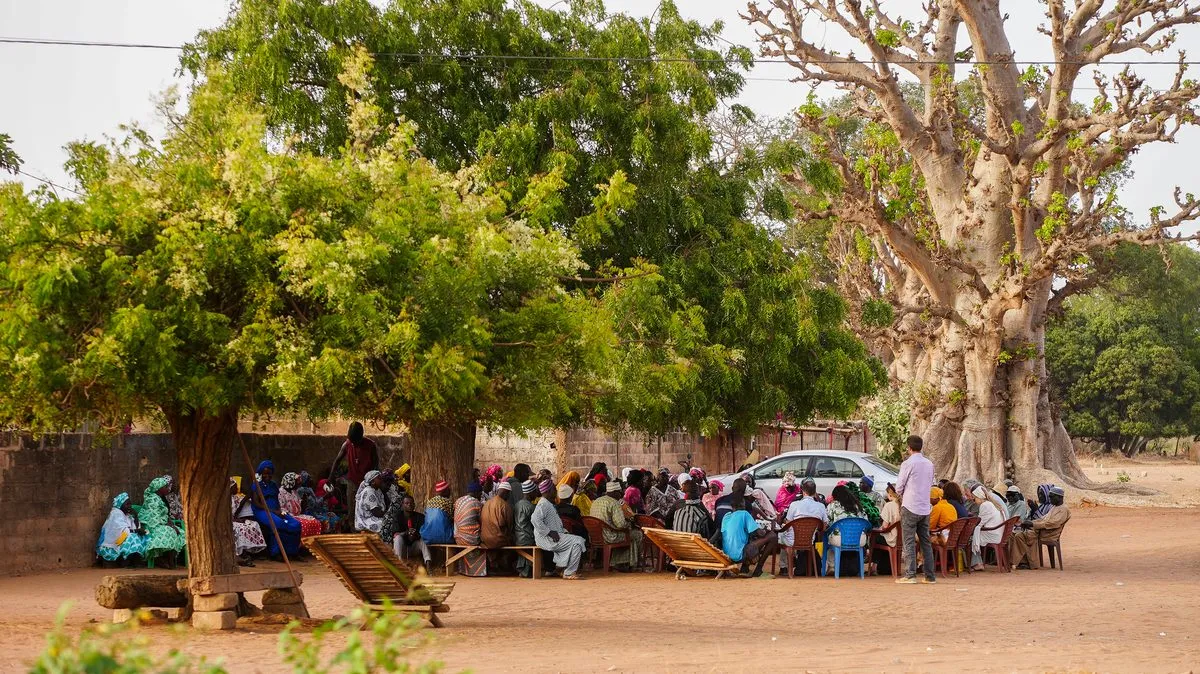
Facilitated workshops, support to Village Development Committees, scenario and governance pathway co-construction, support to alternative markets and RACINES committees.
Experimentation
Farmer Field Schools (FFS), village land-use planning, community investments, development of non-timber forest product value chains, agroecology integration into Bignona Technical College.
Communication & advocacy
Multimedia tools (photo, video, forum theatre), territorial advocacy, youth-focused campaigns, marketing of agroecological products, knowledge capitalisation and dissemination.
Role of CREATES
CREATES leads social-science knowledge co-production, multi-stakeholder dialogue, creative communication, and monitoring-evaluation-learning (MEL). The centre hosts the Thiafoura living lab (Petite Côte) and coordinates support to the Mbour and Bignona DyTAELs. Nitidæ contributes technical expertise in agroecological intensification and supports producer organisations in the Saloum. A single project manager based at Nitidæ ensures unified coordination.
2025 highlights
-
Territorial diagnostic of the Mbour - Petite Côte department, handed over to the DyTAEL as a basis for strategic planning
-
Open-source mapping platform for agroecological initiatives, finalised and ready to be transferred to the DyTAELs
-
DyTAEL Mbour institutional structuring and advocacy workshop (March 2026) with IPAR, ENDA-PRONAT, and the University of Bern
-
DyTAEL Bignona advocacy strategy presented publicly to departmental authorities (September 2025)
-
Thiafoura Tolou Keur rehabilitation: fencing, irrigation, agroforestry nursery, with interest from the Great Green Wall Agency for replication
-
Terracalco agronomic trial led by Nitidæ on 10 ha with 48 producers across 8 villages in Niakhar
-
Co-funding of the pre-Tabaski agroecological market with RACINES in Mbour
Related News
CREATES launches its podcast, Cultiver les Territoires
First episode with Mariam Sow: for a political agroecology in Senegal. A podcast giving a voice to those who think about, live in and transform territories.
Sessène: the Mbour Petite Côte DyTAEL trains farmers in agroecology and organic fertilisers
On 24 September 2026, at Sessène town hall, the Mbour Petite Côte DyTAEL brought together farmers from Sessène and Fissel, technical services and local elected officials around agroecological practices and the use of organic fertilisers.
Territorial advocacy: the DyTAEL Mbour Petite Côte technical committee sets its roadmap
Meeting on May 16, 2026, the technical committee of the DyTAEL Mbour Petite Côte defined its advocacy priorities to defend territories against land grabbing, overfishing, and the breakdown of local value chains.
Mariam Sow visits the TERAL Living Lab in Thiafoura and inaugurates CREATES' new podcast studio
CREATES had the honour of welcoming Mariam Sow, one of Senegal's leading voices in peasant movements and agroecology, for a day of exchange between Thiafoura, Ndioukh o Fissel and Ngaparou - including field training and the inauguration of CREATES' new podcast studio.
Visit of the Vice-Prime Minister of Liechtenstein to Ndiouck Fissel
H.E. Sabine Monauni, Vice-Prime Minister of Liechtenstein, travelled to Ndiouck Fissel with the Liechtenstein Development Service (LED) delegation to discuss the concrete realities of the agroecological transition in Senegal.
Institutional structuring and advocacy: three days with the DyTAEL of Mbour Petite Côte
From March 24 to 26, 2026, the DyTAEL of Mbour Petite Côte gathered to consolidate its structure, clarify its strategic priorities, and strengthen its territorial advocacy capacities - bringing together local governments, farmers' organizations, researchers, and partners.
Sindia: a workshop to build collaboration with the Saafi inter-village Committee
CREATES organized a workshop with the Inter-village Committee for Environmental Protection of the Saafi zone to jointly define a collaboration strategy in response to the rapid transformations in the Mbour department.
DyTAEL workshop in Mbour: action-research serving the territories
CREATES presented the territorial diagnostic of Mbour – Petite Côte and its online mapping platform for agroecological initiatives at the DyTAEL workshop held at the Mbour City Hall.
Advocacy for a just and sustainable agroecology in Bignona
The DyTAEL of Bignona met the Departmental Council to deliver a strong message: the department's food systems can only develop sustainably by and for the farming communities that have shaped them.
Participatory mapping: revealing territories to guide collective action
CREATES experiments with participatory mapping as a tool for co-constructing knowledge, enabling communities to visualise the transformations of their territory and mobilise collective action.
Bey Diiwaan project launch
CREATES officially launches the Bey Diiwaan — Cultivating Territories project, an action-research program on sustainable food systems across three regions of Senegal.