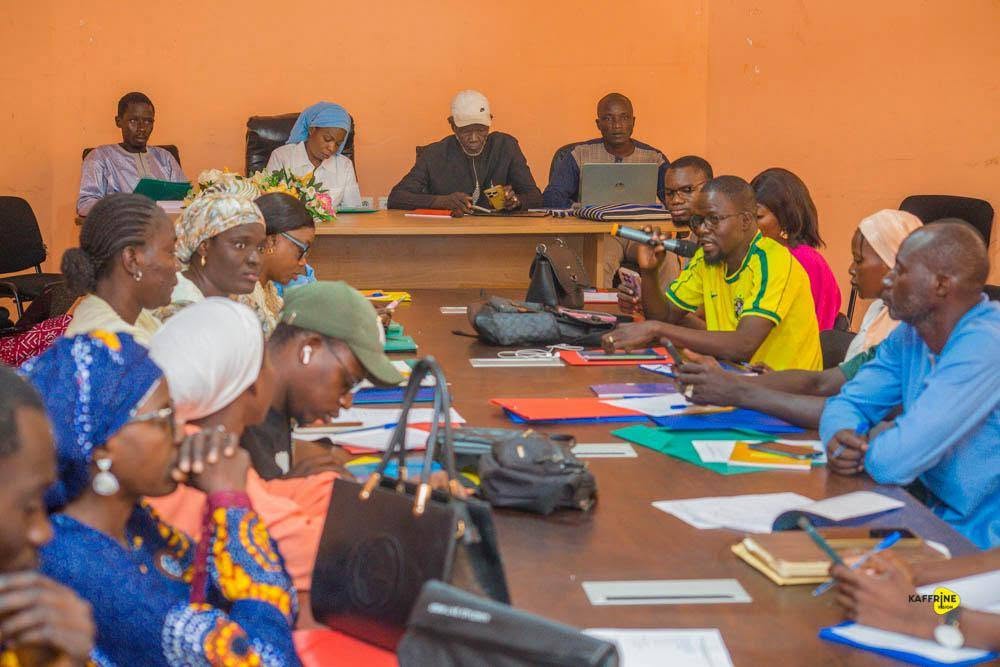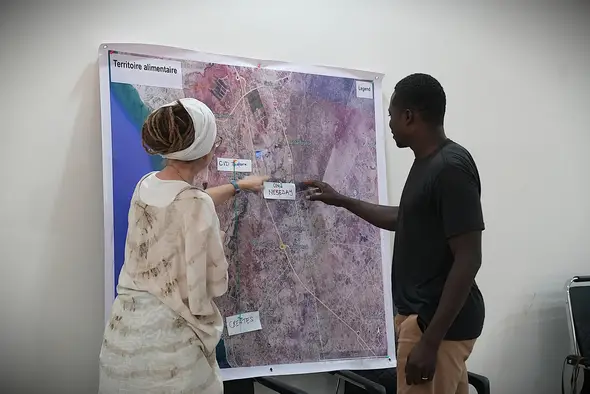
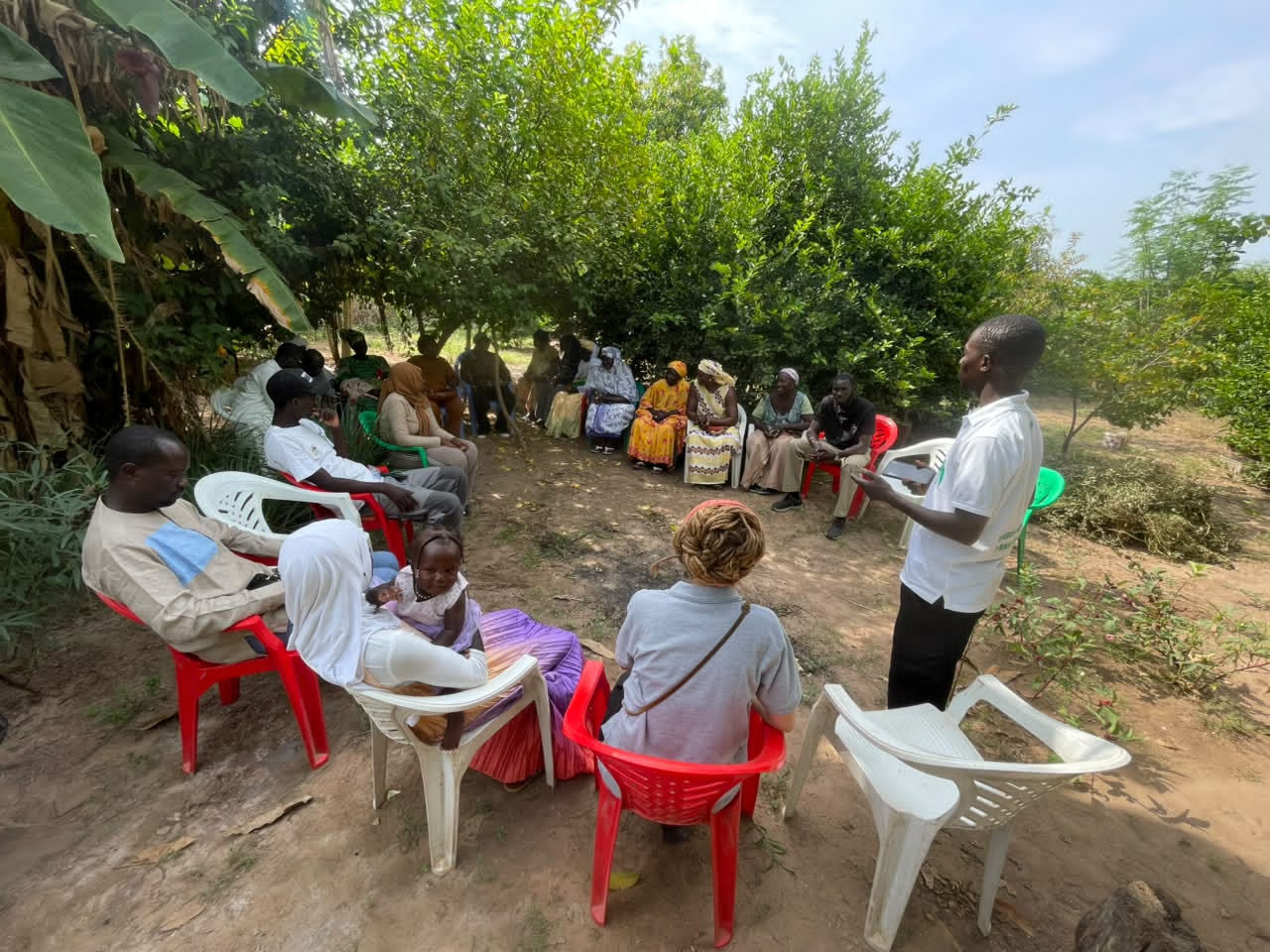
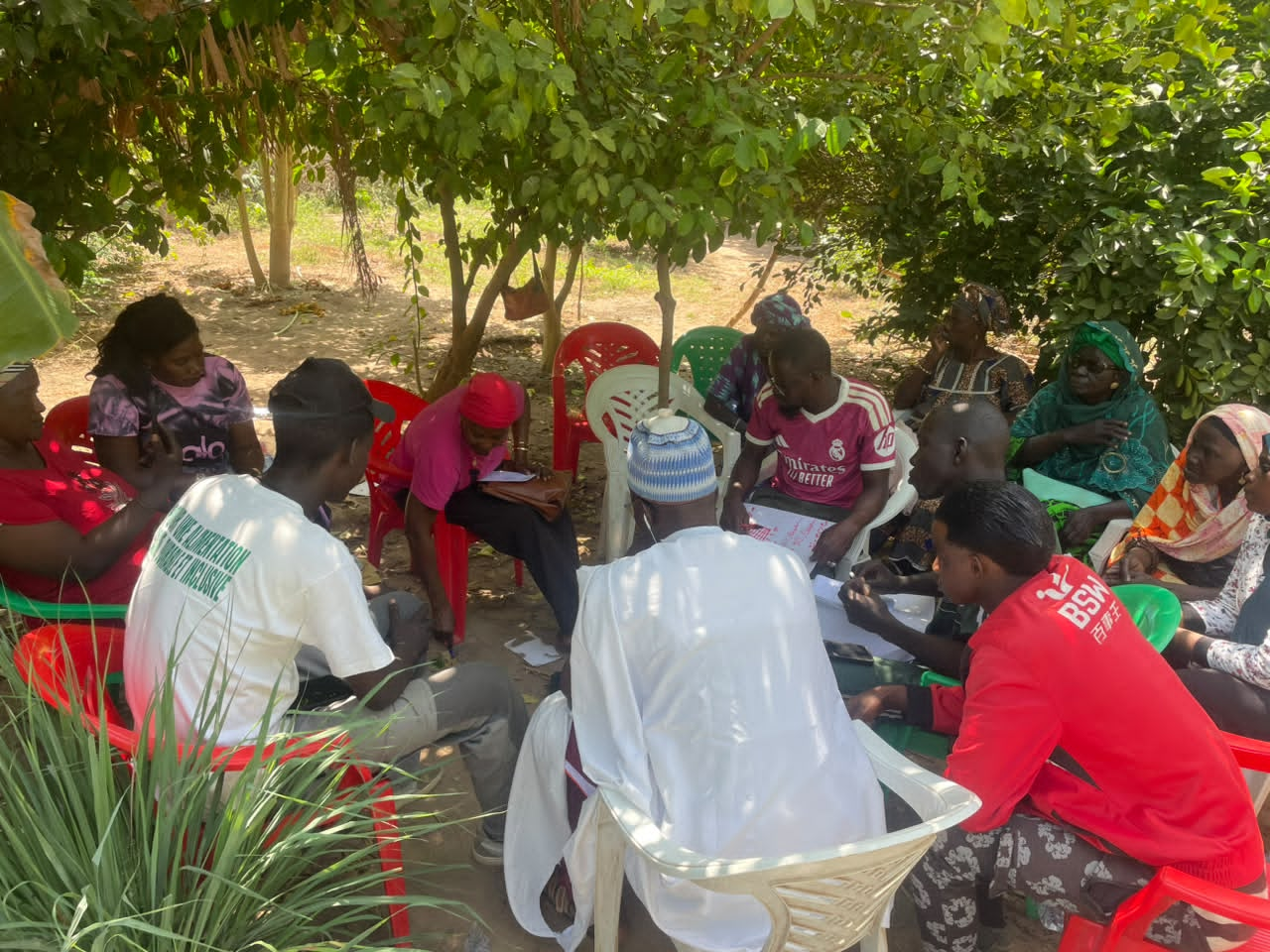
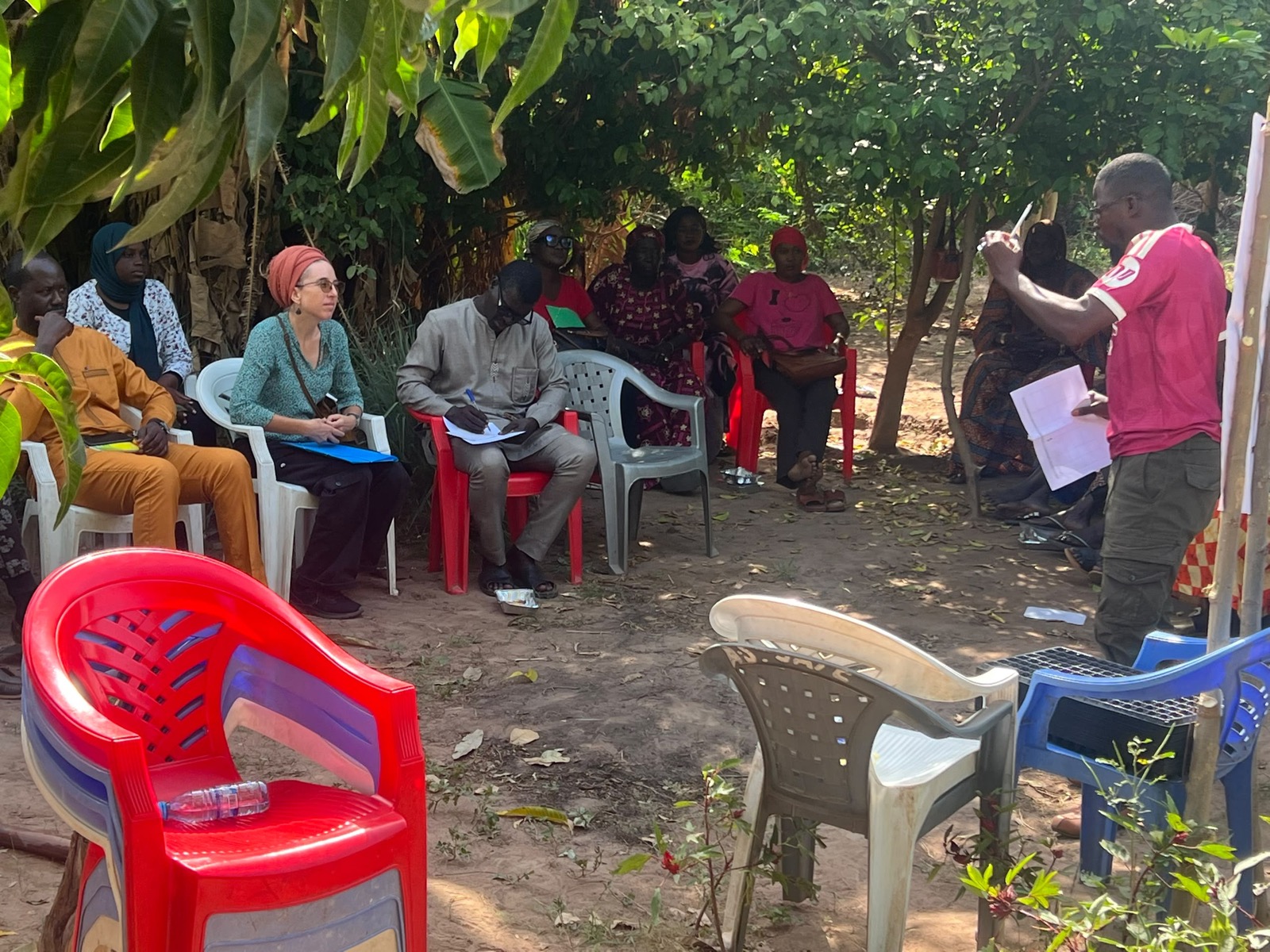
On 4 and 5 November 2026, 27 farmers who are members of the Kaffrine ObSAT (Observatory of Territorial Food Systems) trained in launching an agroecological market gardening season. Nineteen of them are women. The training took place outdoors, in the shade of the trees at the host site.
In June, the participatory diagnosis carried out with local stakeholders highlighted the farmers’ need for technical support. Much of a market gardening season is decided before the first seed goes in: choice of crops, calendar, available water, quality of seedlings. That preparation is what we worked on.
Day one: planning
After a refresher on the principles of agroecology by Lahine Ndao, our field coach in Kaffrine, and Saliou Thiandoum, agroecology project officer, participants worked on crop planning: which crops to grow, how to organise them over time and across the plot, and how to build a crop calendar that accounts for water needs and the farm’s resources.
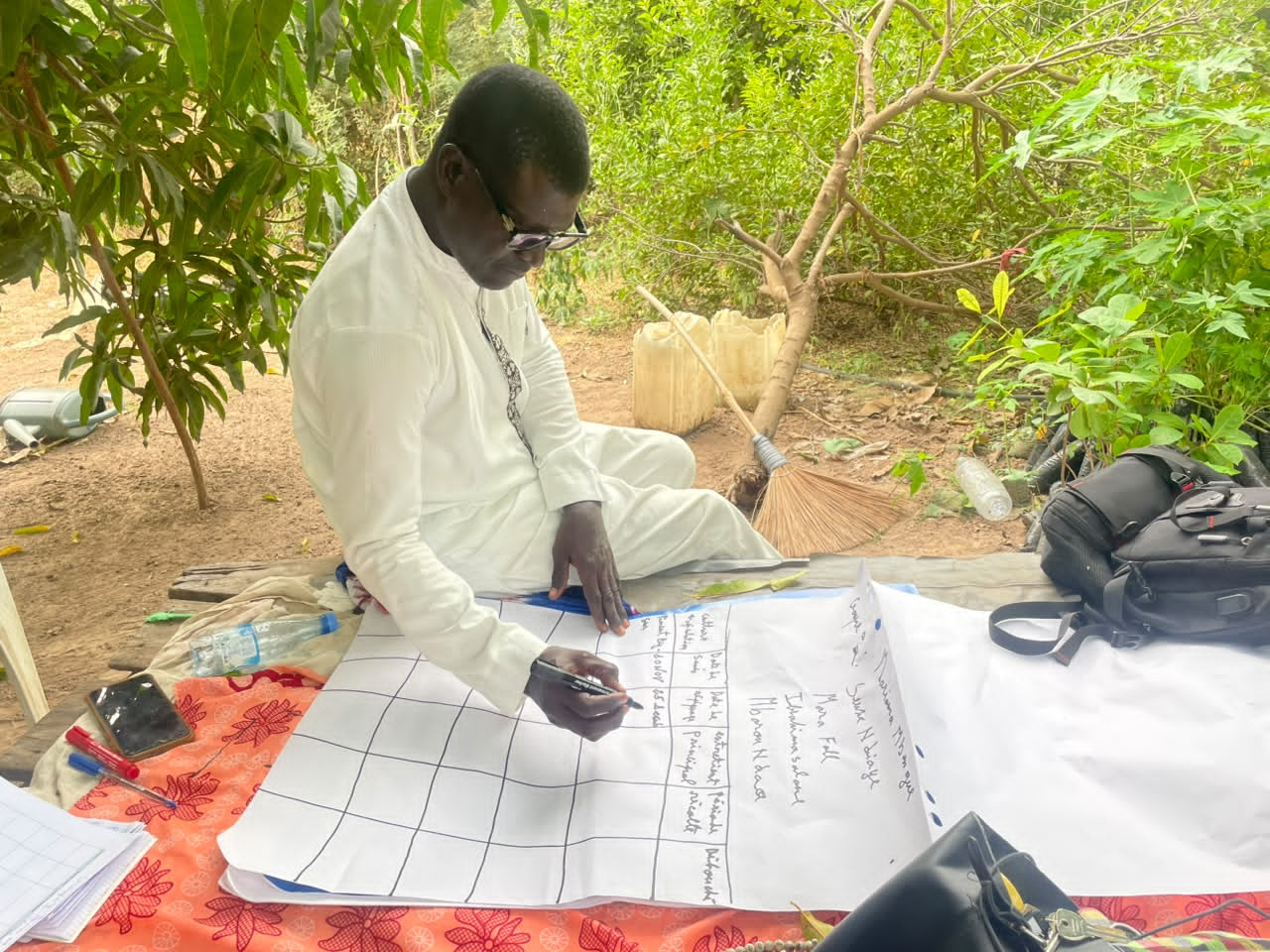
The work was done in groups, drawing on each person’s experience. The presentations the next morning sparked lively debates, which confirmed Kaffrine’s market gardening potential.
Day two: raising seedlings
The second day focused on the nursery, the stage on which the quality of the whole season depends. Preparing the site and the substrate, selecting seeds, sowing in trays and on beds, watering, protecting young plants and preparing them for transplanting: each step was explained, then practised.
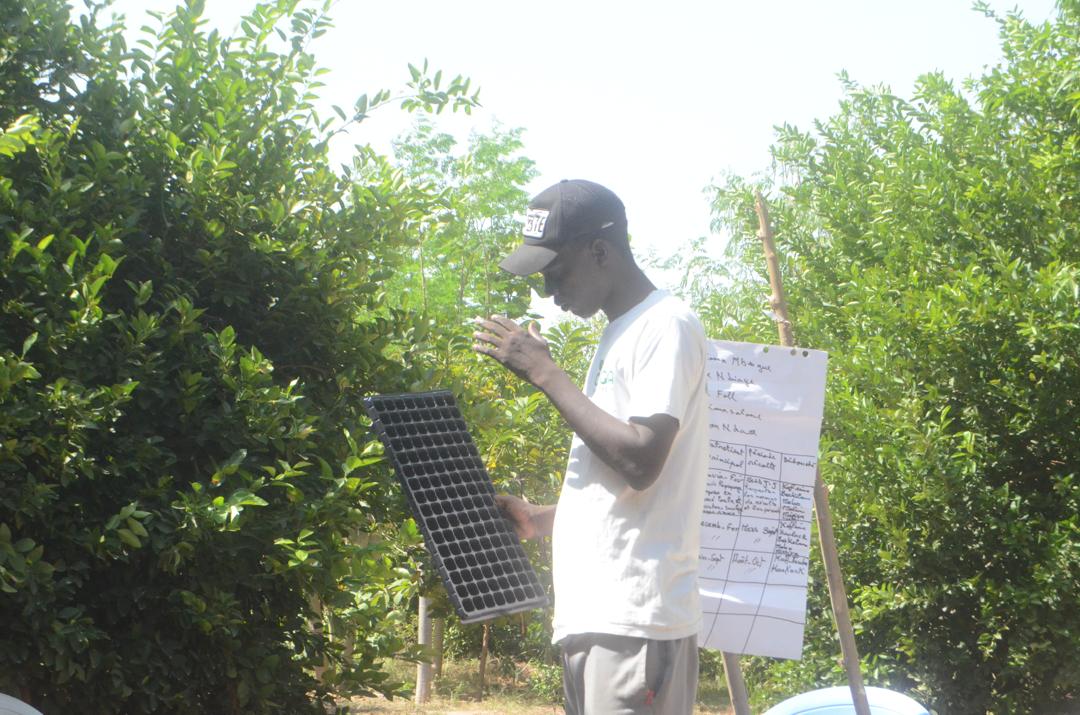
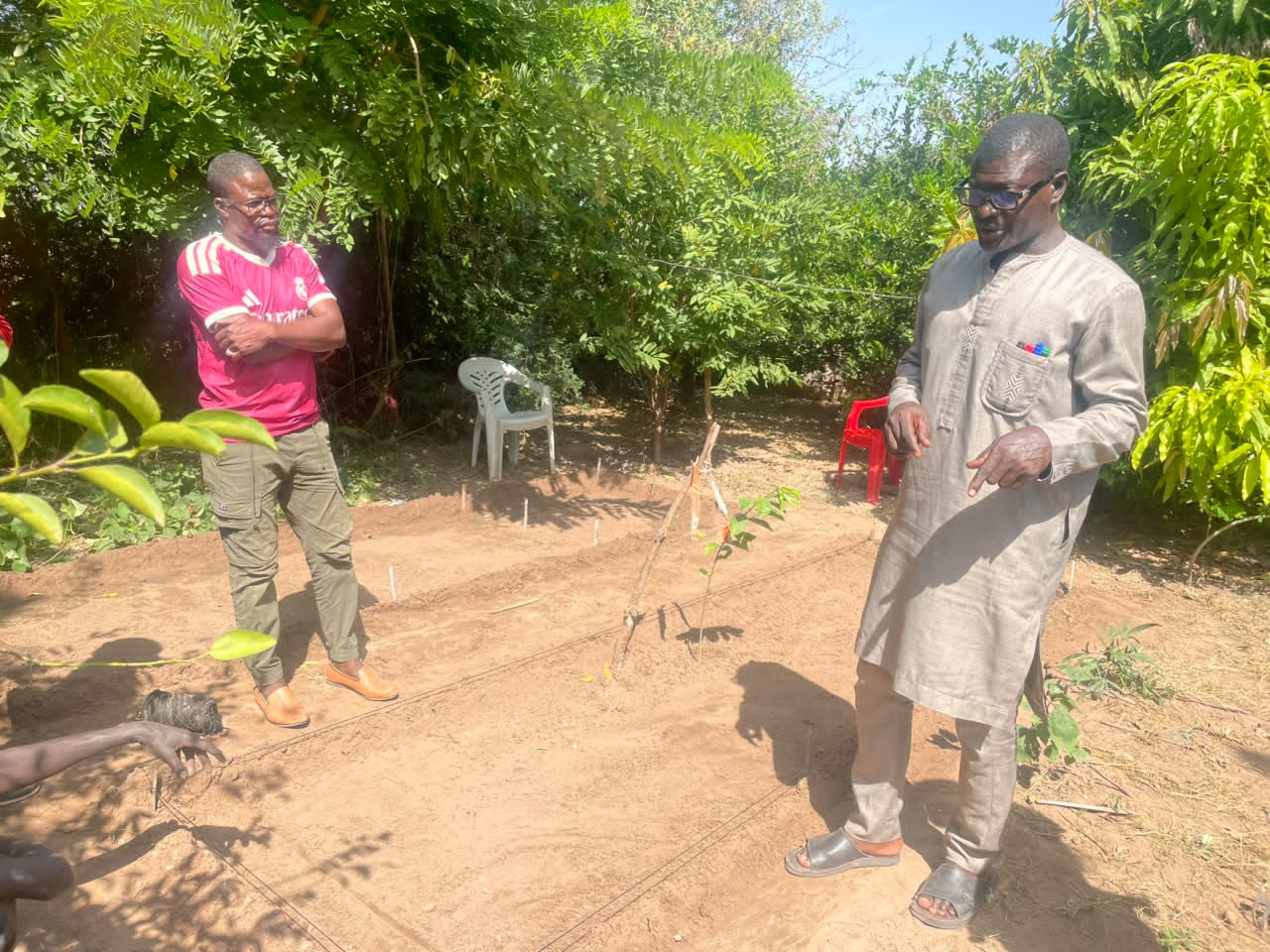
Each of the two groups prepared a tray nursery, and two beds were sown with tomato and chilli. The host site is looking after them, so their germination can be checked during upcoming visits.
Seeds for the season ahead
Twenty-four participants left with vegetable seeds (okra, aubergine, lettuce, cucumber, tomato, chilli) and potting soil, so they can apply what they practised this season.
What comes next happens on the farms. We are planning follow-up visits to support the setting up of nurseries and crop calendars, and to see how the distributed seeds perform.
This training is part of the NICE project (Nutrition in City Ecosystems), funded by the Swiss Agency for Development and Cooperation (SDC), which works in Kaffrine and Bambilor on access to local, healthy and nutritious food.